Becoming
we sit at the table with winners
Jenn Drummond Has Always Been Climbing
BY PAMELA ZEMBANI
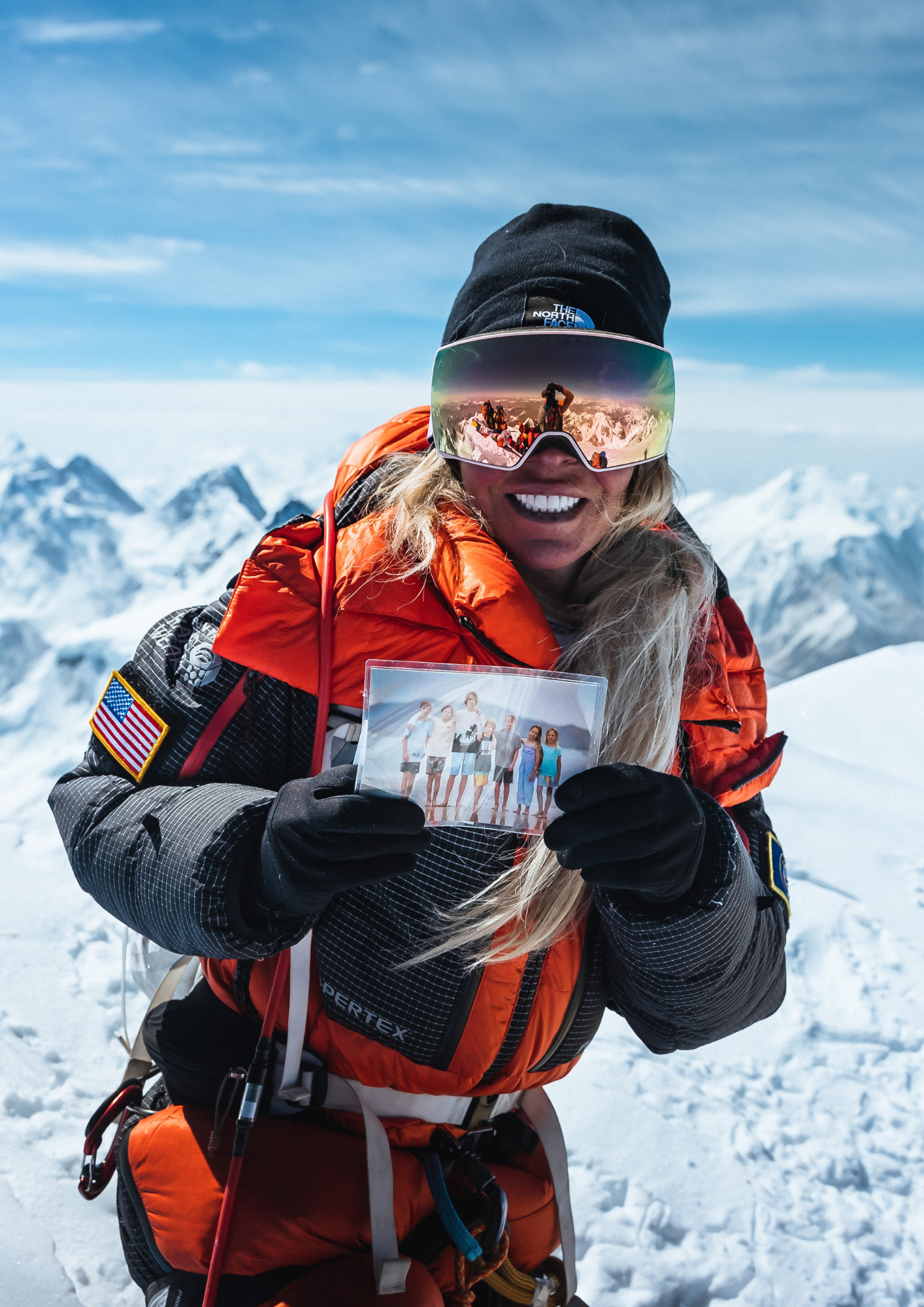
“By the time Jenn Drummond learned the language of mountains, she had already been climbing her whole life.”
There is a moment in every woman’s life when the old definition of strength stops working. For Jenn Drummond, that moment didn’t arrive with a summit or a standing ovation—it arrived quietly, in the realization that waiting had become more dangerous than trying. What followed was not a reinvention, but a remembering: of the girl who learned to be capable instead of vulnerable, of the woman who learned to perform instead of pause, and of the life that had always been asking her to begin. In the conversation that follows, Jenn reflects on the inner terrain that shaped her long before the mountains did—childhood lessons about competence and silence, the hunger for safety that disguised itself as ambition, the tension between motherhood and becoming, and the moment everything changed when time stopped feeling infinite. Her answers unfold like a map, tracing the quiet reckonings and brave decisions that led her here. This is not a story about summits alone. It is a story about what it takes to stop waiting, and to finally step into the life that has been calling you all along.
When you think back to your childhood, what did “strength” look like in your home, and who modeled it for you?
Strength looked like holding everything together and never letting the outside world see what was happening inside the house. It meant performing well no matter what. If things felt heavy or chaotic at home, you didn’t slow down or fall apart—you carried on. You handled it internally. Strength was competence. It was good grades, excelling in sports, and making sure you weren’t a burden. I learned very early that being capable was safer than being vulnerable.
As a little girl, what did you dream your life might feel like, even if you didn’t have words for it yet?
I didn’t dream about achievements as much as I dreamed about ease. I imagined a life where things felt supported, taken care of, softer somehow. When I think back, it reminds me of Annie—that feeling of life after the orphanage, when everything opens up and someone finally has your back. A big, expansive life where you didn’t have to earn rest or belonging. I couldn’t articulate it then, but I was longing for safety.
What parts of your younger self did you learn to hide in order to belong or be accepted?
I hid anything that felt inconvenient—anything that wasn’t easy, agreeable, or compliant. I learned that being “noisy,” emotionally or energetically, wasn’t welcome. So I became efficient. Capable. Low-maintenance. I learned how to present the version of myself that made things smoother for everyone else, even if it meant silencing parts of my own experience.
Was there a moment early in life when you realized the world might expect something different of you because you were a girl?
Yes. I remember being on a co-ed soccer team when I was young. I was strong and fast, and people assumed I must be a boy pretending to be a girl. That moment stayed with me. It was the first time I realized that strength in a female body could confuse people. That being capable didn’t fit neatly into expectations placed on girls. It planted an early awareness that I might have to navigate the world differently.
Who saw you clearly when you were young, and how did that shape you?
My coaches did. From gymnastics to tennis to soccer, they saw my potential and refused to let me stay where I was. They pushed me—not just to win, but to grow. They saw discipline, drive, and resilience in me before I had language for those traits. That belief became a quiet foundation. Even when I doubted myself later, I already knew what it felt like to be seen for who I was capable of becoming.
“I learned early that being capable was safer than being vulnerable.”
Growing up, did you imagine a “big life,” or did that vision arrive later?
I always imagined a big life. From a young age, I associated bigness with freedom. The bigger my life felt, the more untouchable I believed I would be. Bigness meant autonomy—being able to call the shots and not feel at the mercy of anyone else’s decisions. I didn’t yet understand the cost of carrying a big life, but I was certain I wanted one.
What did success mean to you before life reshaped that definition?
I believed financial success was the foundation of everything else. I thought if I could just make enough money, safety, freedom, and peace would naturally follow. Life has complicated that belief. Money is a powerful tool, but it’s not a complete answer. It can reduce stress and create options, but it doesn’t prevent heartbreak or replace the deeper work f becoming whole.
Was there ever a version of your life you pursued because it felt expected, not because it felt true?
Yes. I followed the traditional college path largely because it was “the way it was done.” I didn’t realize there were other viable routes to impact and stability. I originally wanted to become a doctor because doctors helped people and earned a good living. At the time, I didn’t know those same outcomes could be achieved through many different paths. My vision was shaped more by expectation than exploration.
What fears quietly guided your decisions in early adulthood?
A fear of conflict guided many of my choices. I watched my parents argue about money and internalized the belief that financial stress was the root of most problems. I told myself that if I made enough money, I could avoid conflict altogether. That belief drove me—but it was incomplete. Money can ease tension, but it doesn’t eliminate the need for communication, boundaries, or emotional maturity.
When did you first feel the tension between who you were and who you were becoming?
That tension showed up in college. I began to realize the medical path I was on didn’t fully align with who I was becoming. Something in me was pulling toward business, strategy, and creation. Pivoting wasn’t easy, but it was clarifying. Looking back, I’m deeply grateful I listened to that early signal. It was one of the first times I chose alignment over expectation.
How did becoming a mother change the way you understood responsibility—to others and to yourself?
Motherhood introduced me to unconditional love in a way nothing else ever had. This tiny human became the greatest gift life could offer. Responsibility shifted instantly. My life was no longer centered on my own advancement but on supporting theirs. Their safety, growth, and becoming mattered more than anything I wanted for myself. Motherhood didn’t shrink my world—it gave it meaning.
Were there moments when your dreams felt in conflict with motherhood? How did you reconcile that?
At first, I believed the best way to mother was to put my dreams on hold so I could help my children achieve theirs. Sacrifice felt like love. Over time, I realized that living my dreams wasn’t a betrayal of motherhood—it was one of its greatest gifts. Demonstration is more powerful than instruction. It’s better for my children to witness a full, aligned life than to watch me abandon mine and try to explain fulfillment from the sidelines.
What have your children unknowingly taught you about courage?
They’ve taught me that courage is love in action. Showing up is courage. Trying is courage. Challenging yourself is courage. Courage isn’t loud or performative—it’s the quiet decision to engage fully with life. I believe it may be the most important virtue, because without courage, none of the others can truly be lived.
How do you hold ambition and tenderness in the same body?
It’s a practice, not a fixed state. Ambition requires pushing forward; tenderness requires recovery and presence. They aren’t opposites—they’re partners. You push, then you restore, so you can push again. Ignoring either one creates imbalance. Honoring both creates sustainability.
What guilt have you had to unlearn?
I had to unlearn the belief that presence meant being in the same physical space all the time. Presence is about attunement, not proximity. It’s about listening, engaging, holding emotional space. I also had to release the guilt around rescuing. My children are capable. My role isn’t to fix everything, but to stand beside them while they navigate. I trust them. I always have them. And sometimes the most loving thing I can do is simply sit with them as they find their way.
After surviving the 2018 accident, what part of you didn’t survive—and what part was born?
The part of me that didn’t survive was my need to please people and my willingness to wait for the “right time.” Both died instantly. The accident was a visceral reminder that time is uncertain. What was born was urgency rooted in truth. I stopped outsourcing permission and started following my internal compass. If something mattered, I moved. Waiting stopped making sense.
“I didn’t dream of achievements. I dreamed of ease — a life where I didn’t have to earn rest or belonging.”
What truths became impossible to ignore after that moment?
I realized that we are all lit up by different things—and that those differences matter. There is no universal path to fulfillment. What brings one person alive may mean nothing to another. The truth I couldn’t ignore was this: suppressing what energizes us is a quiet form of self-abandonment.
How did your relationship with fear fundamentally change?
I realized I wasn’t actually afraid of dying—I was afraid of looking foolish, of not having it all figured out. Once I saw that, fear lost its grip. Messy action became more valuable than polished inaction. Trying mattered more than perfection. Progress became the goal, not approval.
What did “living intentionally” begin to mean in your daily choices?
It meant interrupting autopilot. Frequent awareness check-ins: Am I present? Is this aligned? Is this how I want to spend this moment? Small pauses created big shifts. Intention wasn’t about grand gestures—it was about choosing consciously instead of reacting habitually.
Was there resistance to the woman you were becoming?
Always. Resistance shows up every time you grow. What changed wasn’t its presence, but my response. I stopped seeing resistance as a stop sign and started seeing it as information. Growth doesn’t require resistance to disappear—it requires clarity about what to do once you feel it.
Why mountaineering—not as a sport, but as a language for your life?
Because everything in life is a mountain. You begin with a desire, a summit—but what matters is who you become on the way. Mountaineering strips everything down. You can’t bypass the work or fake readiness. The mountain becomes a mirror. It shows you your patterns, your limits, and your capacity to expand beyond them.
What inner mountain are you still climbing?
The mountain of “enough.” Learning how to let myself be instead of always needing to do. Achievement has always been my language, but presence requires a different kind of strength. That climb is quieter, less visible, and just as demanding.
“The accident taught me that waiting was more dangerous than trying.”
When things get hard now, what truth do you return to?
I remind myself that I am still here. I get to experience hard. The alternative would be not being here at all. Hard passes. Knowing that keeps me grounded and moving forward.
What do you hope people feel when they hear your story—beyond inspiration?
I hope they feel moved to act. Not to admire, but to begin. I want people to get curious about their own mountains and take the first step. Life is meant to be experienced, not watched from the sidelines.
If you could sit beside five-year-old Jenn, what would you gently promise her?
I would promise her that it’s safe to enjoy it all. That she doesn’t need to rush to become someone worthy. I would tell her that presence is the gift—and nothing meaningful is lost by slowing down.
And if you could write a note to sixty-year-old Jenn, what would you hope she thanks you for?
I hope she thanks me for being brave. For choosing the things that felt impossible and doing them anyway. For not shrinking, not waiting, and not abandoning myself when it would have been easier. I hope she looks back and says, Thank you for going.
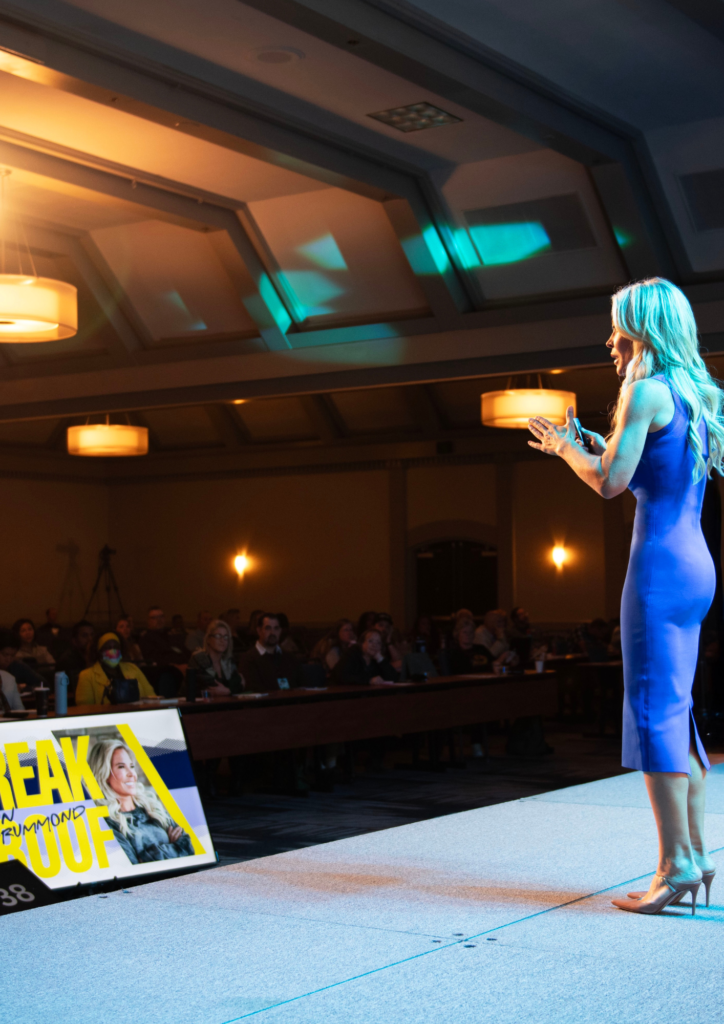
“Everything in life is a mountain. The summit isn’t the point — who you become on the way is.” — Jenn Drummond
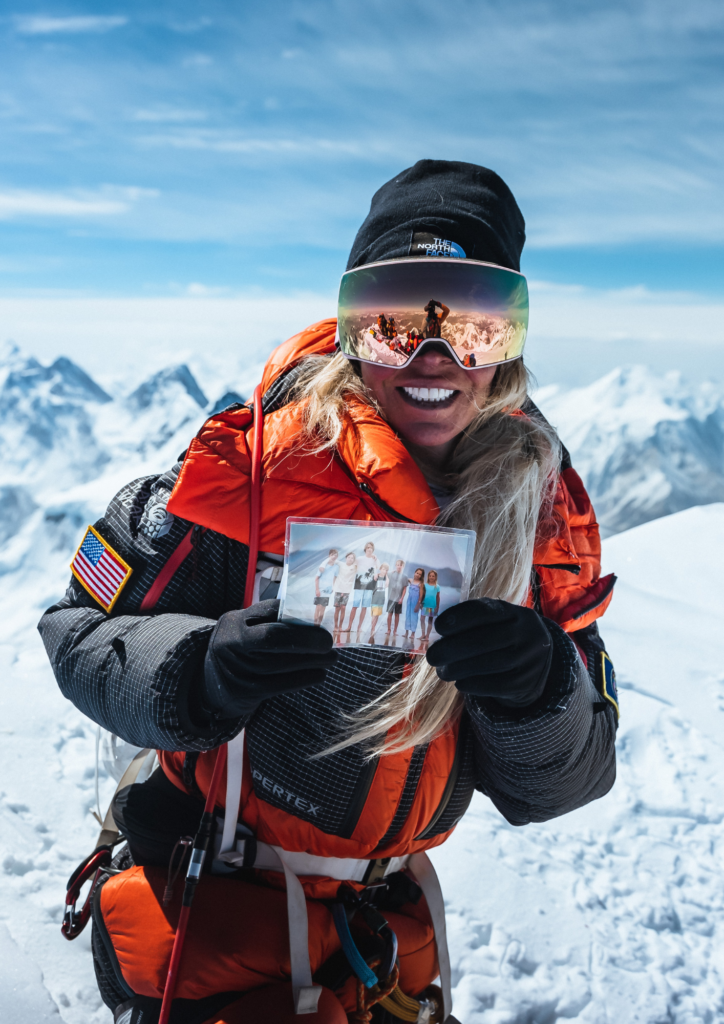
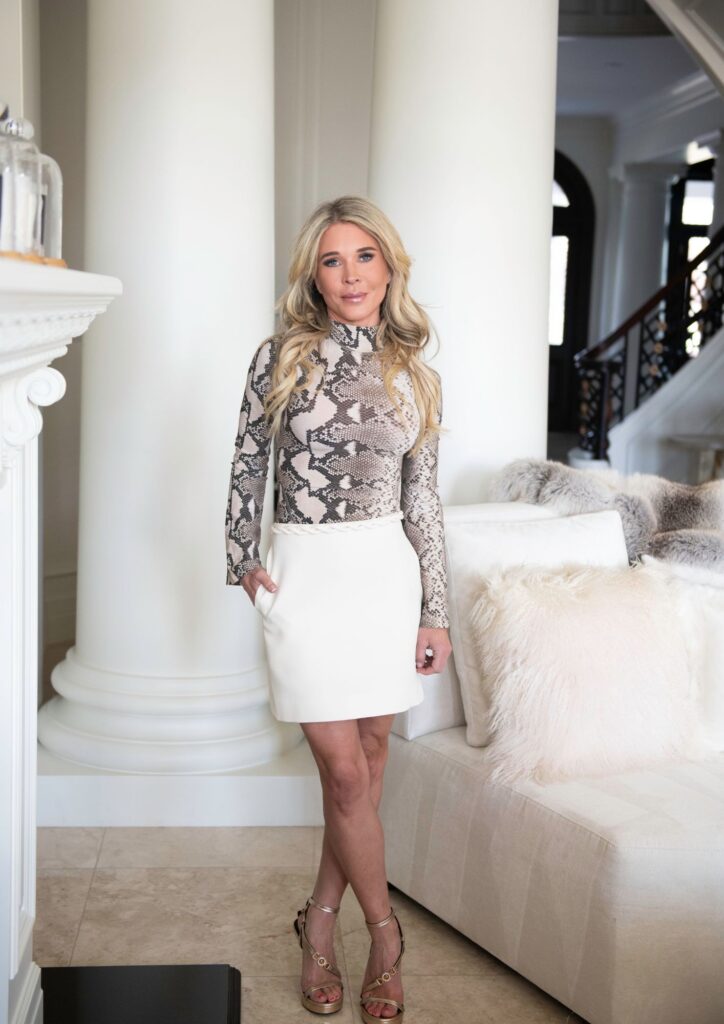
Jenn Drummond is a mountaineer, motivational speaker, and mother of seven, best known as the first woman to complete the Seven Second Summits—the second-highest peaks on each of the seven continents, a feat considered more technical and demanding than the traditional Seven Summits. Her journey into mountaineering began after surviving a life-altering car accident in 2018, which became a catalyst for redefining how she lived, led, and chose what mattered. Today, Jenn translates the lessons of the mountains into powerful work beyond them, speaking and teaching on resilience, courage, and intentional living through keynotes, coaching, and her weekly Reinvent Your Next Summit series, where she brings together world-class experts to help others climb their own next chapter. She lives with her family in Utah and continues to invite people everywhere to stop waiting and start becoming. Learn more at https://jenndrummond.com.