Feature Story
WE HIGHLIGHT FOUNDERS WHO ARE LEADING WITH PRESENCE
Shannon: Where Neuroscience Meets the New Language of Leadership
“Don’t lose yourself trying to build something. Build in a way that aligns with who you are and who you want to be remembered as.”
In an era when corporate training often feels like a race to automate human connection, Shannon is building something far more ambitious: a return to what makes people trust, listen, and change. Her work in corporate sales training—rooted in neuroscience, lived experience, and an instinct for emotional truth—lands less like a workshop and more like a masterclass in what it means to lead with both intellect and heart. But the story didn’t begin in a boardroom. It began in Kansas City, within a close-knit constellation of people shaped by Ozarks roots—an environment that functioned like a village in the truest sense. Life was noisy, communal, and guided by a single, steady principle: everyone works, everyone contributes, and everyone survives together.
Origins of a Curious Mind
Shannon was raised by a single mother who often worked two jobs just to keep the household upright. Her earliest memories are of moving between her grandparents’ home, her uncle’s orbit, and the wise consistency of her great-grandmother. She was surrounded, supported, seen. “I was the first grandchild,” she says. “There was always someone around. And everyone worked hard. I knew I wanted to find a different way.” Curiosity arrived early and decisively. She remembers studying the emotional weather patterns of her family—what made them tick, what made them tense, why some people tolerated behavior others wouldn’t. “I was trying to understand human nature from the time I could speak,” she says. “That instinct never left.” She was bright, athletic, and endlessly questioning—her grandmother still recalls the infamous “Why should I?” whenever Shannon was asked to set the table. She secretly let the family dog inside the house, breaking generational Ozarks code. “Totally worth it,” she says, laughing. Possibility, however, was harder to come by. No one around her had escaped the grind of low-paying corporate jobs. So she accumulated degrees—four in total—not out of passion but out of fear. Fear of repeating what she’d seen. Fear of being trapped. It wasn’t until her mid-20s, when she met a successful entrepreneur who became her first real mentor, that she understood scale, ambition, and freedom were even options.
The Making of a Leader and a Turning Point
The pandemic year hit her like a tidal wave. She was running her firm, maintaining an aging boat, sleeping poorly, drinking more than she wanted, and holding herself together with sheer will. “I wasn’t doing well,” she admits. Then she found The Brain That Changes Itself, and everything pivoted. Research became a lifeline. She devoured scientific journals, learned the mechanics of neuroplasticity, and built a pilot program—first for herself, then for dozens of others. The results were astonishing: anxiety dropping by 90% in some participants; habits changing at the cellular level; confidence returning. She built a neuroscience-based gaming app that is now live on Apple and Google. But eventually, she came home to her professional roots: sales. And with that, she built NeuroSell—a program that isn’t about persuasion but about the brain’s need for safety, authenticity, and attunement.
Sales Training for the Post-Automation Era
Shannon’s corporate sales training isn’t “rah-rah” motivational and it isn’t bro-culture bravado. It is grounded in neuroscience and built for a workforce exhausted by scripts, automation, and inauthentic performance. Her sessions validate what great salespeople often know intuitively: Why certain tactics work. Why others fail. Why trust is a neurological event—not a personality trait “Clients tell me the content isn’t surprising,” she says. “It’s clarifying. It gives language to what they’ve always felt but couldn’t articulate. Sometimes, her training reminds teams of the fundamentals. Other times, it ignites them. Revenue “takes off like a plane,” she says. But her favorite transformation didn’t come from sales. It came from the early neuroscience program. The results were astonishing: anxiety dropping by 90% in some participants; habits changing at the neural level. One participant shared that his anxiety dropped so significantly his wife noticed the difference. It changed his life. “He was a tough guy—direct, no-nonsense,” she says. “That number floored us both.”
The Science of Human Leadership
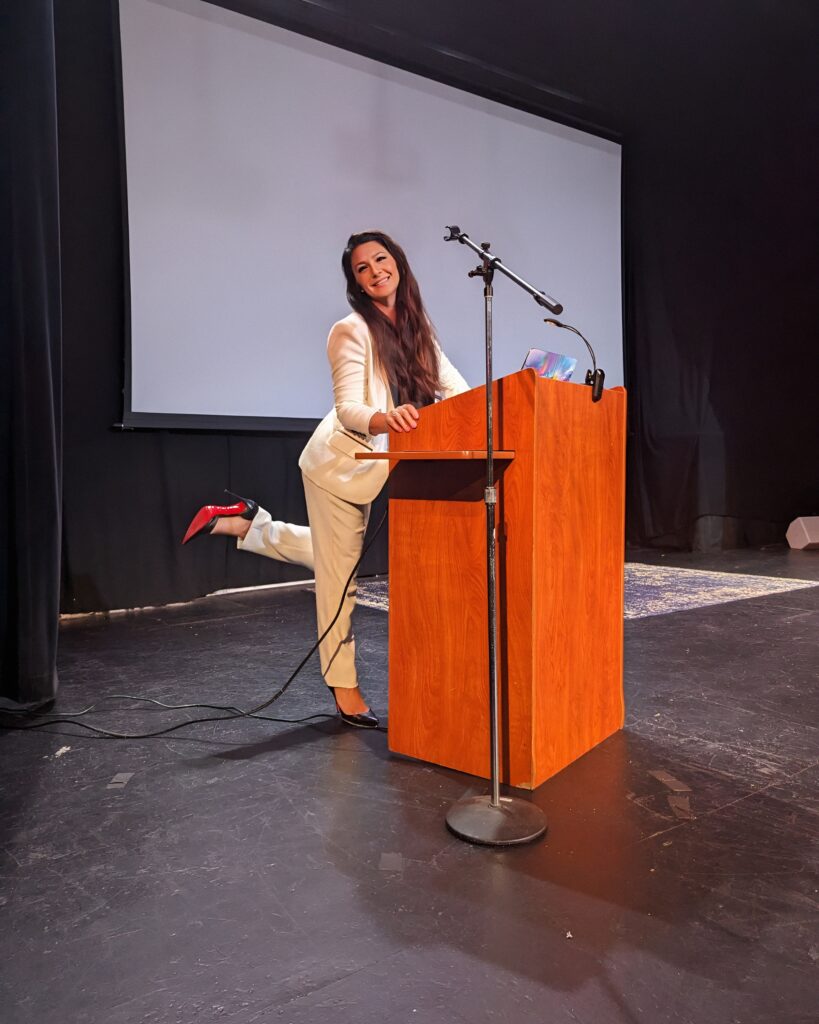
Shannon teaches leaders something simple but revolutionary: The brain detects threat 200 milliseconds before we consciously know it. Authenticity reduces that threat. Safety opens the prefrontal cortex. Trust makes intelligence accessible. In other words: People do their best thinking with leaders who make them feel human. Presence, she says, is “genuine attunement”, the feeling of being truly seen. Before speaking, she grounds herself with visualization and breathwork. Connection shifts people out of self-protection and into collaboration. Influence isn’t performance—it’s resonance. And vulnerability? “It’s a superpower,” she says without hesitation.
Resilience, Reimagined
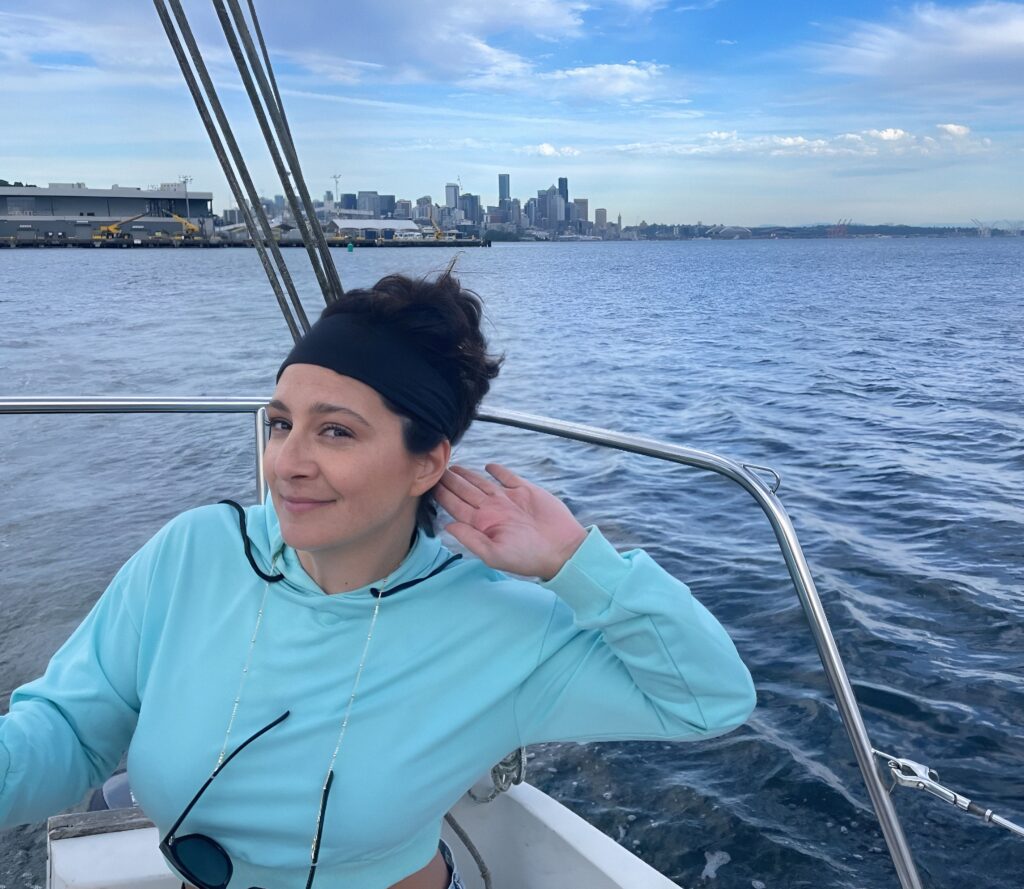
Shannon isn’t here to build a brand. She’s here to build people. Her purpose is not grandiose. It’s human-sized. “Positively impact people,” she says. “Be kind. Show love. Even in small ways.” The adversity she’s endured, the losses, reinventions, hard chapters, didn’t break her; they seasoned her. “We aren’t here to be comfortable,” she says. “We’re here to evolve.” Today she lives on an island in the Pacific Northwest where ravens, hummingbirds, and seals interrupt her day with reminders that nature is often the first teacher of peace. She meditates daily. She feeds the ravens. She lets the stillness reset her. There are bigger ambitions, of course, like rescuing elephants in Vietnam and pairing it with a yoga retreat. She says it with a laugh, but you sense she means it.
What Comes Next
Her dream is deceptively simple: create positive energy, hold space for others, and teach people to sell—and lead—from the most powerful place in the brain: the regulated, authentic self. “Just be yourself,” she says. “Talk like you’re speaking to your best friend across the kitchen table. Your passion will sort the rest.” In a corporate world racing toward automation and efficiency, Shannon is proving something countercultural: Human connection is not a soft skill. It’s a strategic advantage.
And the leaders who understand the brain—its need for safety, its hunger for authenticity, its capacity for change—won’t just sell more.
They will lead differently.
They will lead human.