
The Pause
DON’T FIX IT. DON’T SOLVE IT. JUST LET IT SURFACE
When Silence Meets Truth: Colette Martin on Healing, Witnessing, and Courage
BY CAMMANEX EDITORIAL
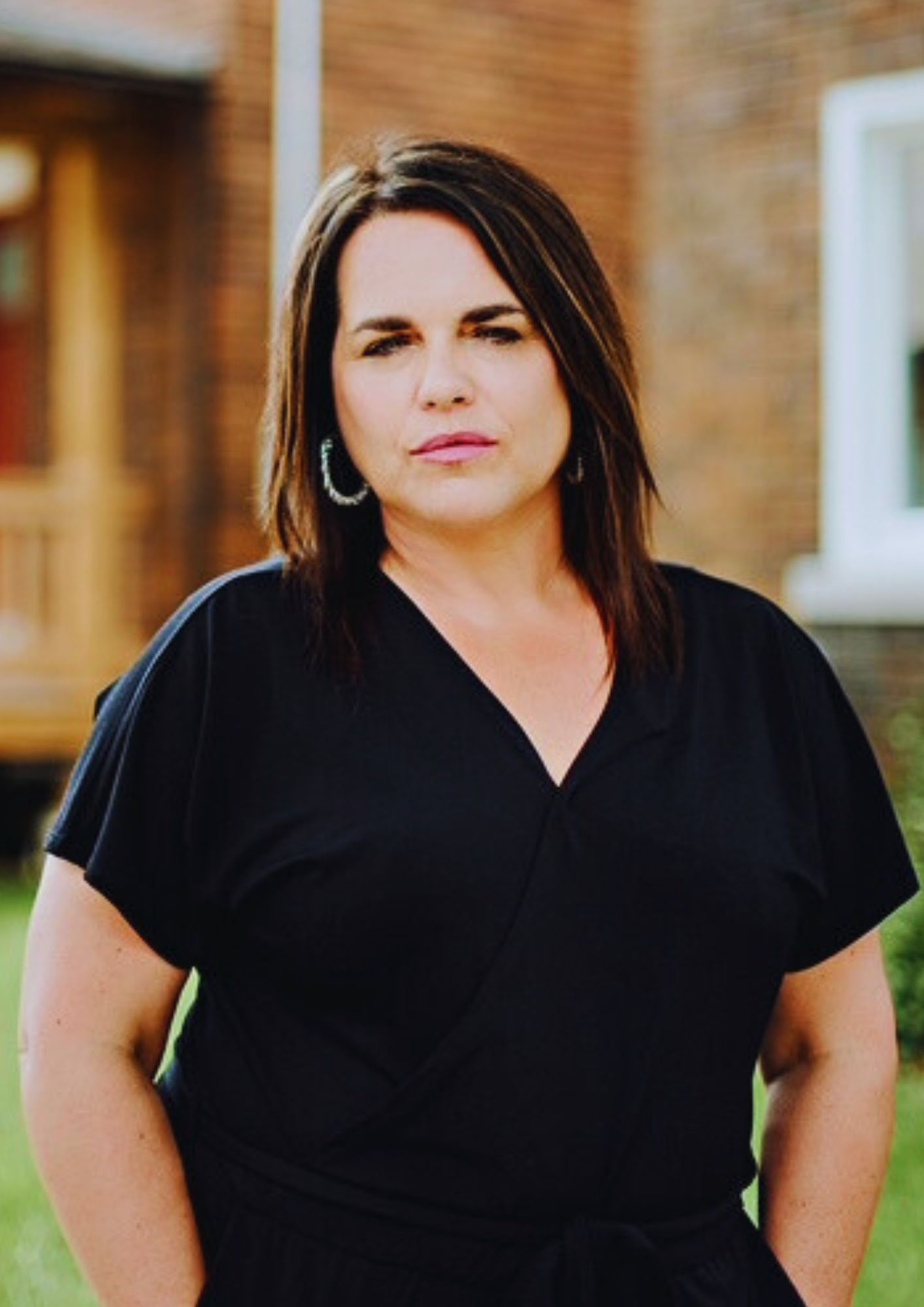
Feature Photo Courtesy of Hilary Gauld
“Slowing down reminds me how much I carried quietly, and how early I learned to be strong.”
Colette Martin’s story is one of survival that unfolded into purpose — a life shaped not only by what she endured, but by what she chose to do with it. Raised in the coastal community of Baie-Sainte-Anne in rural New Brunswick, Canada, Colette survived a near-fatal act of domestic violence in 1997, an experience that left marks far beyond the visible and took years to fully understand. In the aftermath, she did not disappear into silence. Instead, she transformed her pain into a steady, unwavering presence for others, becoming a trusted voice for survivors of intimate partner violence and a force for change within communities across Canada and beyond. Her work reaches far past individual healing, engaging the deeper systems that allow violence to persist and stories to be ignored. Indigenous women and girls in Canada continue to face alarmingly high rates of violence, disappearance, and death — a reality that gives urgent weight to Colette’s advocacy and the communities she stands beside. Through public education, frontline work, and policy change, she has dedicated herself to reshaping how violence is understood and addressed, including championing legislative efforts like New Brunswick’s Bill 17, which gives individuals access to a partner’s history of violent behavior. In the reflections that follow, Colette does not revisit the events themselves. Instead, she offers something quieter and more rare: the inner truths that surface when the world slows — the body’s wisdom, the long arc of grief, and the ongoing, nonlinear work of healing.
When you allow yourself to slow down, what memories tend to surface first?
The earliest memories that surface are often simple ones — small moments of safety I didn’t recognize at the time, and moments of fear I learned to normalize. Slowing down reminds me how much I carried quietly, and how early I learned to be strong without knowing I was doing it.
What part of your story do you carry quietly, even now?
I still carry the loneliness that survival can bring. Even when I was surrounded by people, there were moments when I felt deeply unseen. That quiet loneliness still visits from time to time, but it no longer owns me the way it once did.
How has your body taught you things your mind resisted at first?
My body knew when something wasn’t safe long before my mind was ready to accept it. Tension, exhaustion, pain — these were all signals I ignored for years. Learning to listen to my body became an act of self-respect, a way of finally trusting myself.
What does safety feel like to you today, and how did you learn to recognize it?
Safety feels calm, predictable, and respectful. I learned to recognize it by living through its absence — and by learning to trust myself when something felt wrong, even if I couldn’t explain why.
What kind of silence was the hardest to survive?
The silence of not being believed. That kind of silence isolates you. It makes you question your own reality, and it can be more painful than words ever could be.
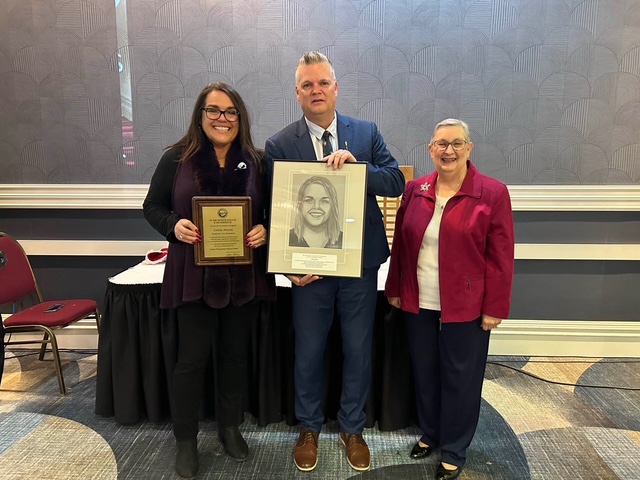
Colette receives a an award from the Minister of public safety along with NB Crime Prevention
“Survival kept me alive; healing asked me to feel.”
When did you first sense that surviving would not be the same as healing?
When I realized I could function, smile, and keep going — yet still feel fractured inside. Survival kept me alive, but healing asked me to feel. And feeling required a different kind of courage.
What emotions still surprise you when they arise?
Grief still surprises me — not only grief for what happened, but grief for what never got to be. For the life that might have existed if things had been different.
What have you learned about grief that few people talk about?
Grief isn’t linear, and it doesn’t disappear. It evolves. You don’t “get over” it — you learn how to carry it with gentleness, and sometimes with patience you didn’t know you had.
How do you hold compassion for yourself on days when strength feels distant?
I remind myself that rest is not failure. On those days, compassion looks like lowering expectations and choosing kindness over criticism. It looks like letting myself be human.
What does resilience feel like when no one is watching?
It feels quiet. Uncelebrated. It’s choosing to keep going even when there is no applause for surviving, no one witnessing the effort it takes just to stay present.
“I had to unlearn the belief that my worth was tied to endurance.”
What belief about yourself had to be dismantled in order to keep living?
I had to let go of the belief that my worth was tied to endurance — that I had to suffer in order to be deserving. Releasing that belief changed everything.
Where do you still notice tenderness in your life?
I feel it in my heart when other women share their stories, and in moments of connection that feel honest and safe. Tenderness shows up when I allow it space.
How do you stay open in a world that often asks survivors to harden?
By choosing vulnerability with discernment. Openness doesn’t mean giving everyone access. It means staying true to myself while protecting what is sacred.
What has advocacy cost you internally?
It has cost me emotional energy, privacy, and sometimes peace. Carrying others’ pain alongside my own can be heavy, even when it’s meaningful.
What has advocacy given you that you didn’t expect?
Deep connection. Purpose. And the profound honor of being trusted with other people’s truths — something I never take lightly.se.
“Hope looks like small, steady choices — choosing safety, truth, and self-respect, even when certainty is absent.”
How do you sit with anger without letting it consume you?
I acknowledge it without judgment and channel it into action. Anger becomes dangerous when it’s ignored, not when it’s
What does rest mean to you now?
Rest is permission. It’s listening to my limits and understanding that I don’t have to earn stillness.
When do you feel most connected to yourself?
When I’m quiet, grounded, and present — often in nature or in meaningful, honest conversation.
What truth continues to unfold rather than resolve?
That healing is not a destination. It’s an ongoing relationship with myself, one that continues to deepen over time.
What does hope look like when it is quiet and realistic?
Hope looks like small, steady choices — choosing safety, truth, and self-respect — even when certainty is absent.